counsellor interviews
To understand the root problem better, I moved to in-depth discussions with counsellors. I observed their working styles, calls, and tools to understand how they manage students.
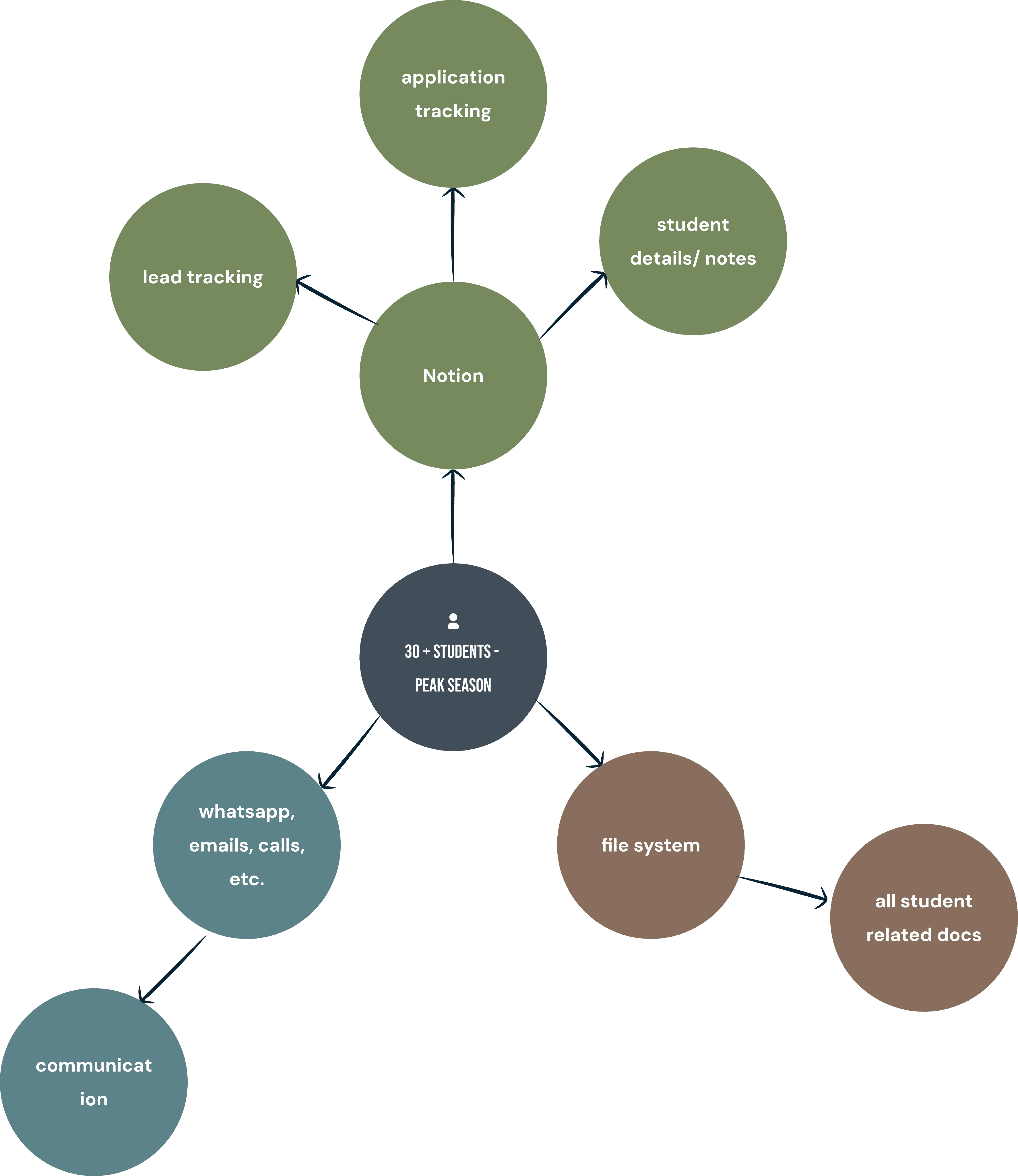
The key insight from the discussions was the consultancy relied on a patchwork of disconnected tools since it started as a small in-house consultancy.
As the consultancy grew, the informal coordination systems that once worked - a WhatsApp message, a quick verbal update; become the biggest risk to student outcomes.
Previously @ BosonQ Psi
// Key insight:
Student data & lead management relied on verbal communication keeping counsellors from managing increasing volume.


// problem framing
how might we
Support counsellors in navigating student data, without disrupting the high-touch, iterative nature of counselling?
Open Questions i Explored
what is the output of the optimizer?
What is the structure and granularity of the optimizer’s output?
allow the user to edit the output?
Should we allow users to edit within the execution view after the optimizer has run?
allow manual overrides by user?
My idea was to let planners lock a service to a crew member and re-run the optimizer around; as well as allowing users to adjust constraints using sliders letting them steer the optimizer towards outputs with different tradeoffs.
does the optimizer produce violations?
What type of violations does the optimizer produce, if any? How should the user proceed forth in case of violations?
// Why I chose a Product → Shop flow
product Discovery → Shop Resolution
Searching for a product lists shops that stock it. Selecting one opens its store page with the chosen product in focus.
Since the app's primary objective is wayfinding, I omitted a separate product screen and instead direct users to the relevant shop while keeping the selected product in context.
User searches for product/brands

Resolves to Shop - Product selected

// planning view
putting it together
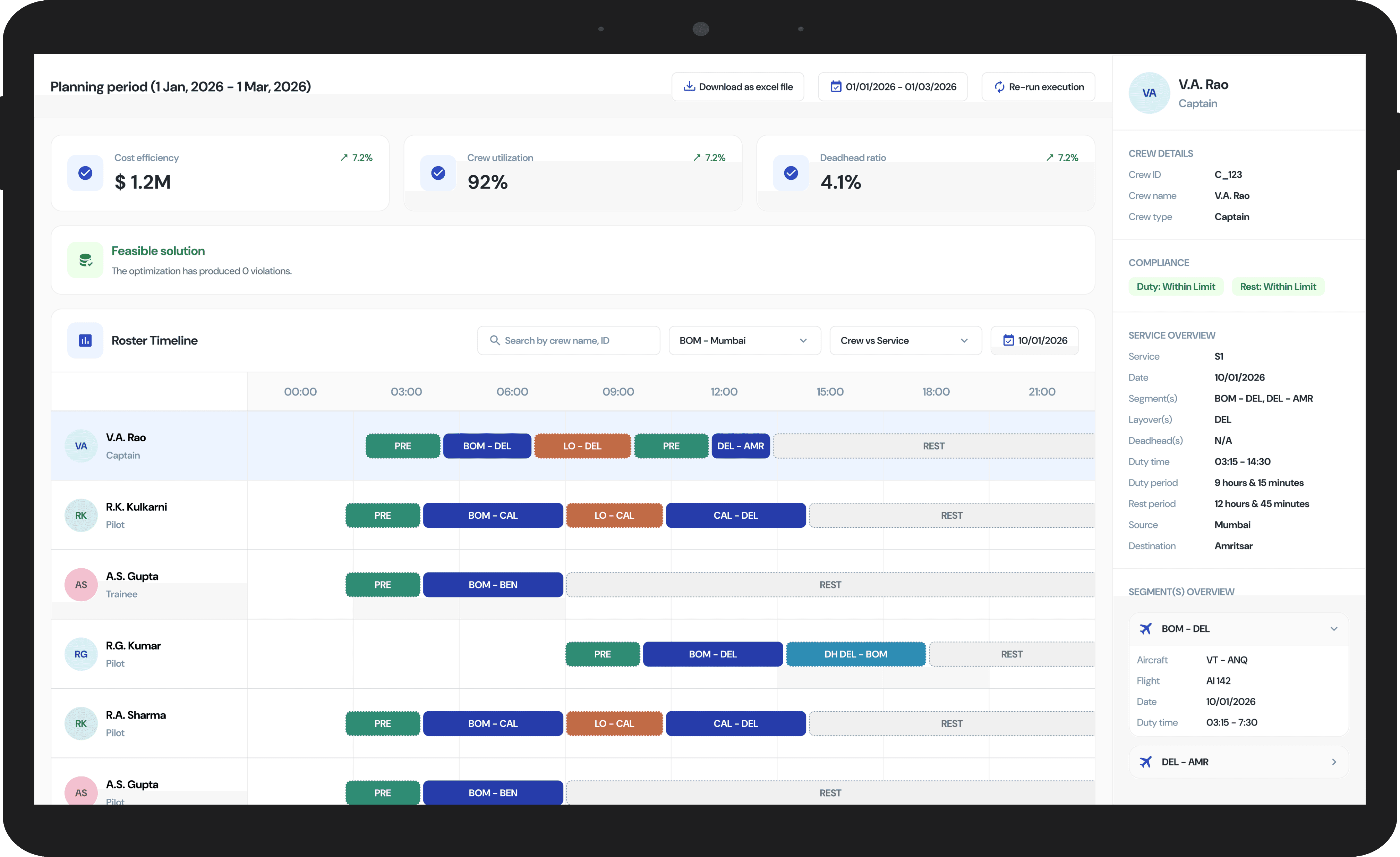
The execution page brings together the optimizer output, violations summary, suggestions to fix, and the Gantt chart with appropriate filters in a single cohesive view. Crew member details were provided by a left panel to ensure the main timeline context stays in view.

// 01 gantt chart
bringing the output to reality
The optimizer generates crew group assignments (composed of individual crew members) mapped against duty periods. A Gantt chart best represents this structure because it clearly visualizes time-based overlaps, sequencing, and allocation across multiple entities in a single view.
// 01 gantt chart
bringing the output to reality
The optimizer generates crew group assignments (composed of individual crew members) mapped against duty periods. A Gantt chart best represents this structure because it clearly visualizes time-based overlaps, sequencing, and allocation across multiple entities in a single view.
key decisions
// 01 gantt chart
bringing the output to reality
The optimizer generates crew group assignments (composed of individual crew members) mapped against duty periods. A Gantt chart best represents this structure because it clearly visualizes time-based overlaps, sequencing, and allocation across multiple entities in a single view.
// 02 infeasible solution
surfacing violations
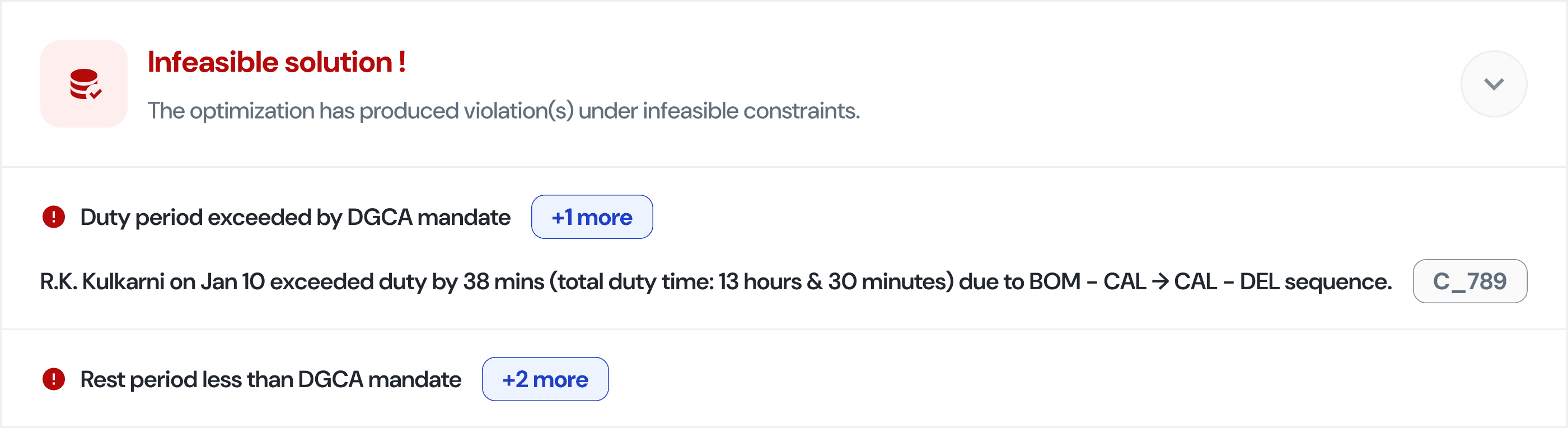
An infeasible solution occurs when user-defined constraints can’t be satisfied. I surfaced this first with a prominent “Infeasible Solution” banner, followed by progressive disclosure (+1 / +2 chips) instead of listing all violations at once.
// 03 suggestions to fix
fixing violations
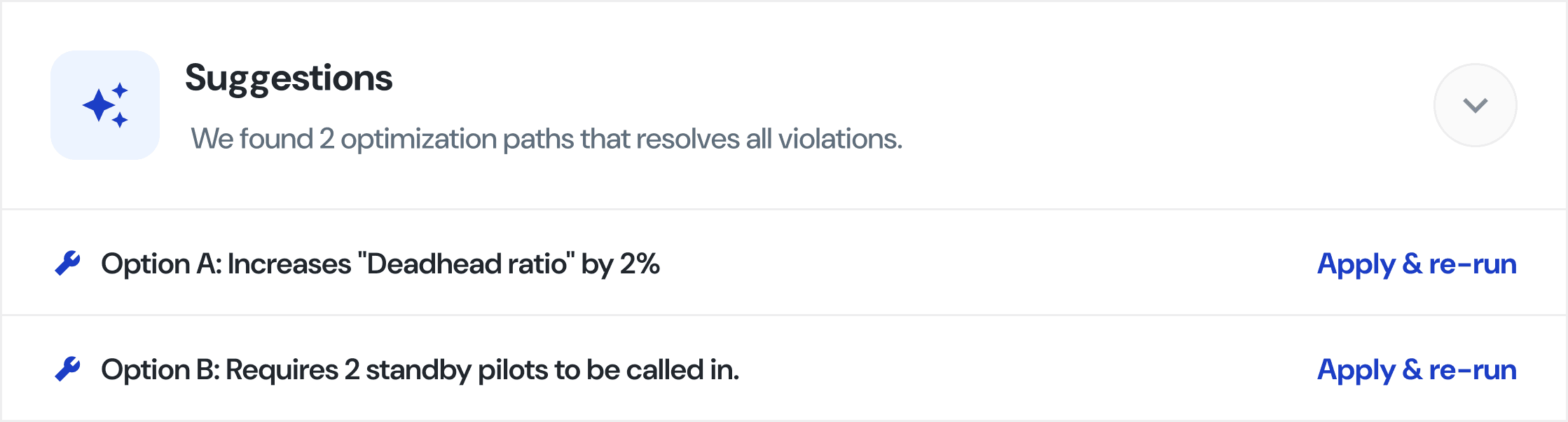
I designed an intelligent suggestions card that offers multiple ways to resolve errors globally, each with clear trade-offs. An apply & re-run button ensures the user doesn't have to do the manual work of fixing the constraints themselves.
// planning view
design sketches
Before moving into high-fidelity designs, I did a deep dive into domain & used sketching to map out the core logic of the optimization interface. These early explorations focused on how to translate complex algorithmic outputs into a human-readable format.
// Key insight:
Raghav needs a way to find due assignments on time, prepare from relevant coursework before he submits assignment, review what he did wrong, and obtain positive feedback from the task for future submissions.
// 03
exploring manipulation freedom


// 02
violations & edge cases
// 01
main data structure

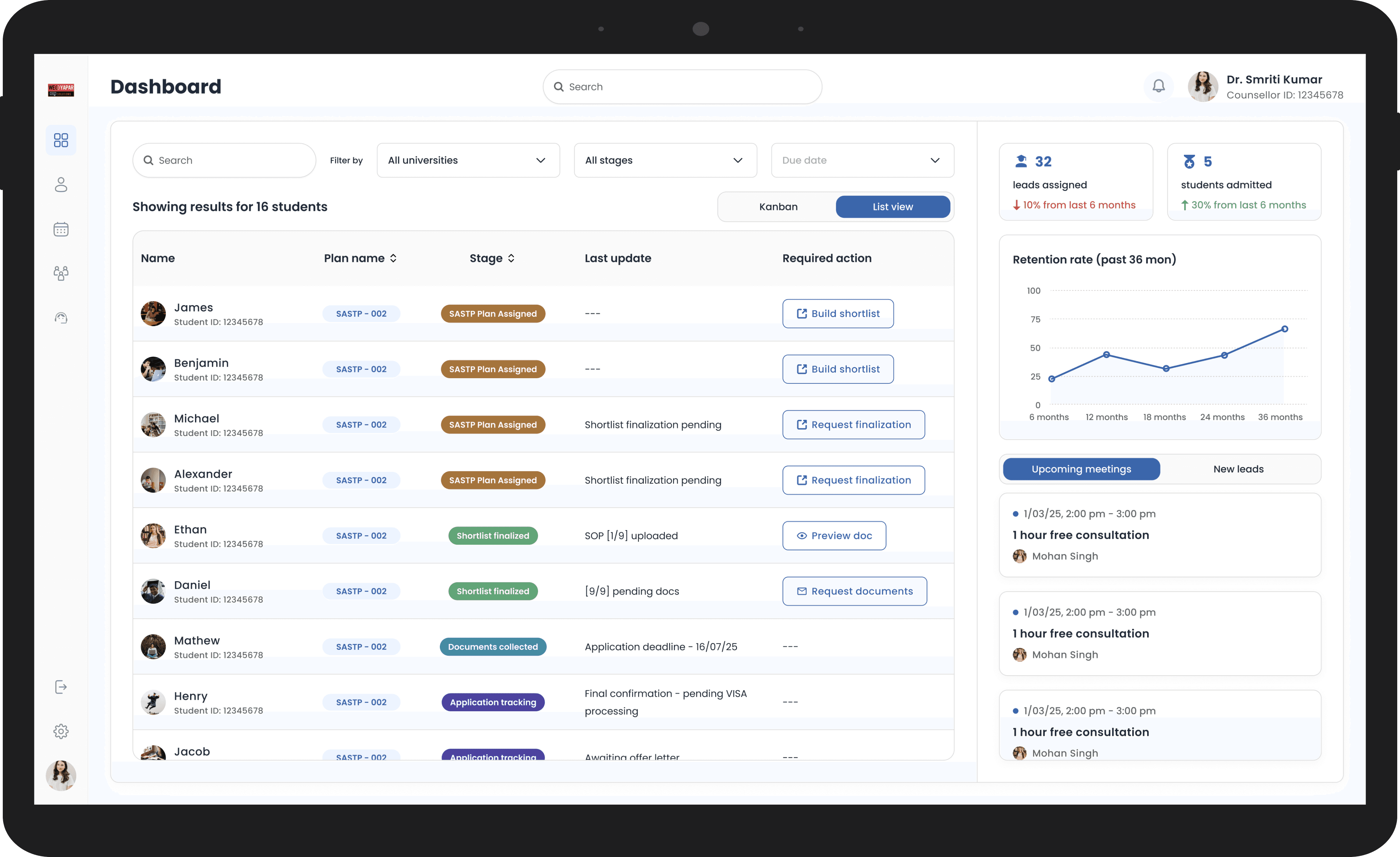
dashboard
dashboard
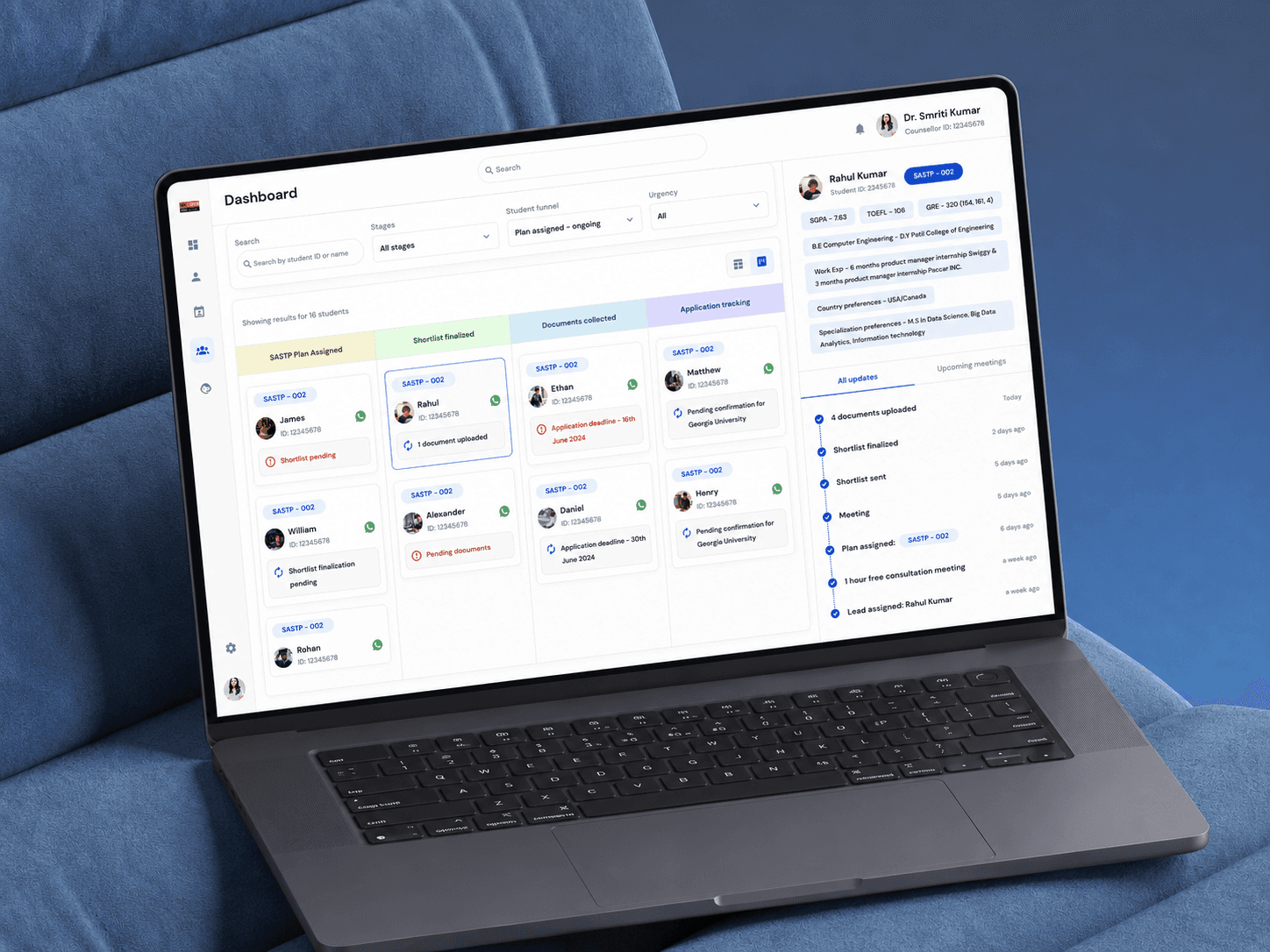
I designed the dashboard with automated lead tracking and a list view to handle a rising student volume.
research strategy
shadowing counsellors
The PM and I spent several hours shadowing counsellors during actual work. We watched their screens, listened to calls, and documented the steps they took to manage each student.
key research finding
inefficient tool set
Counsellors juggled disconnected systems, causing cognitive load, slower decisions, and more errors.
counsellor journey
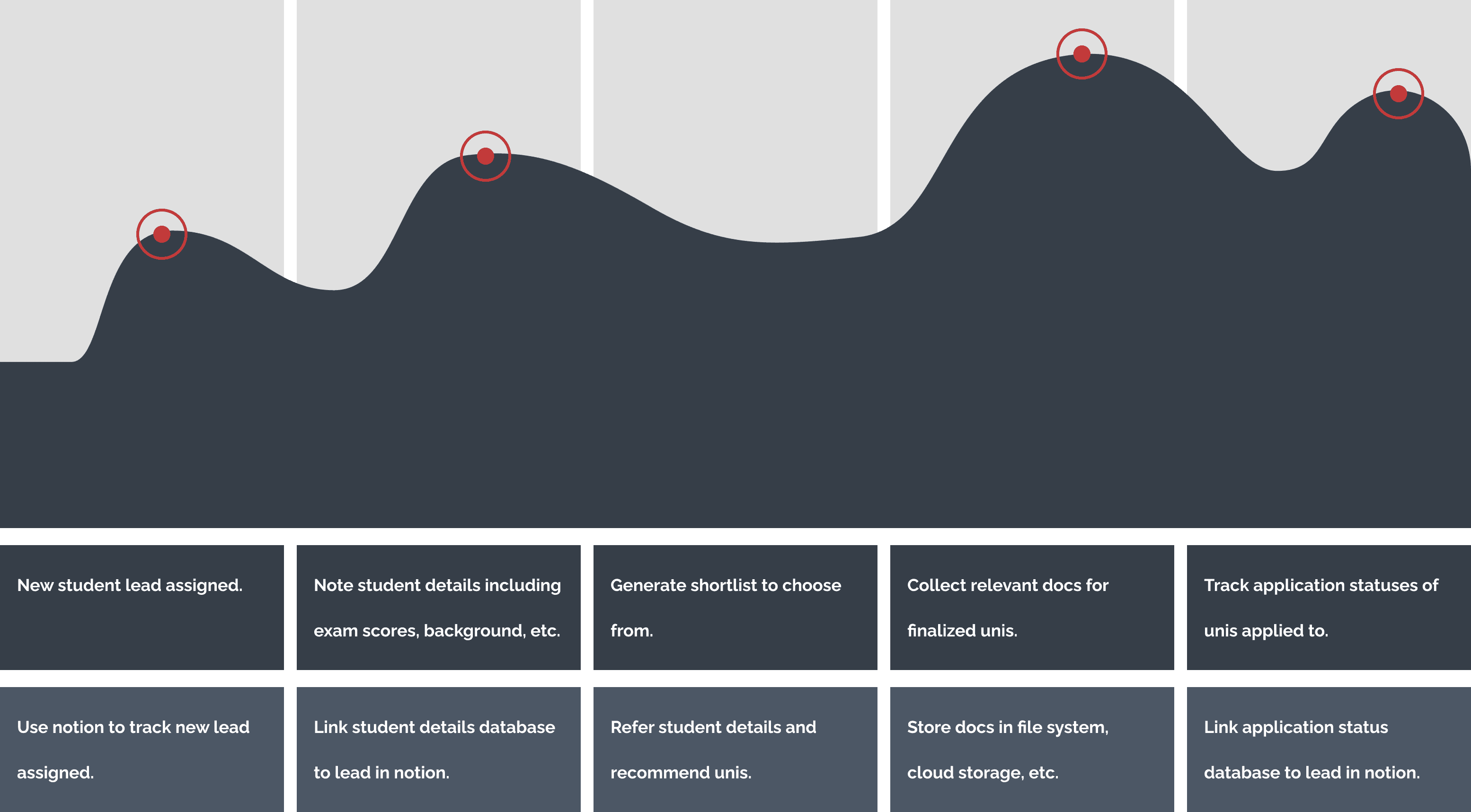
How might we create an experience that helps counselors track, manage, and act on an increasing volume of students while driving efficiency and reducing cognitive load.
solution
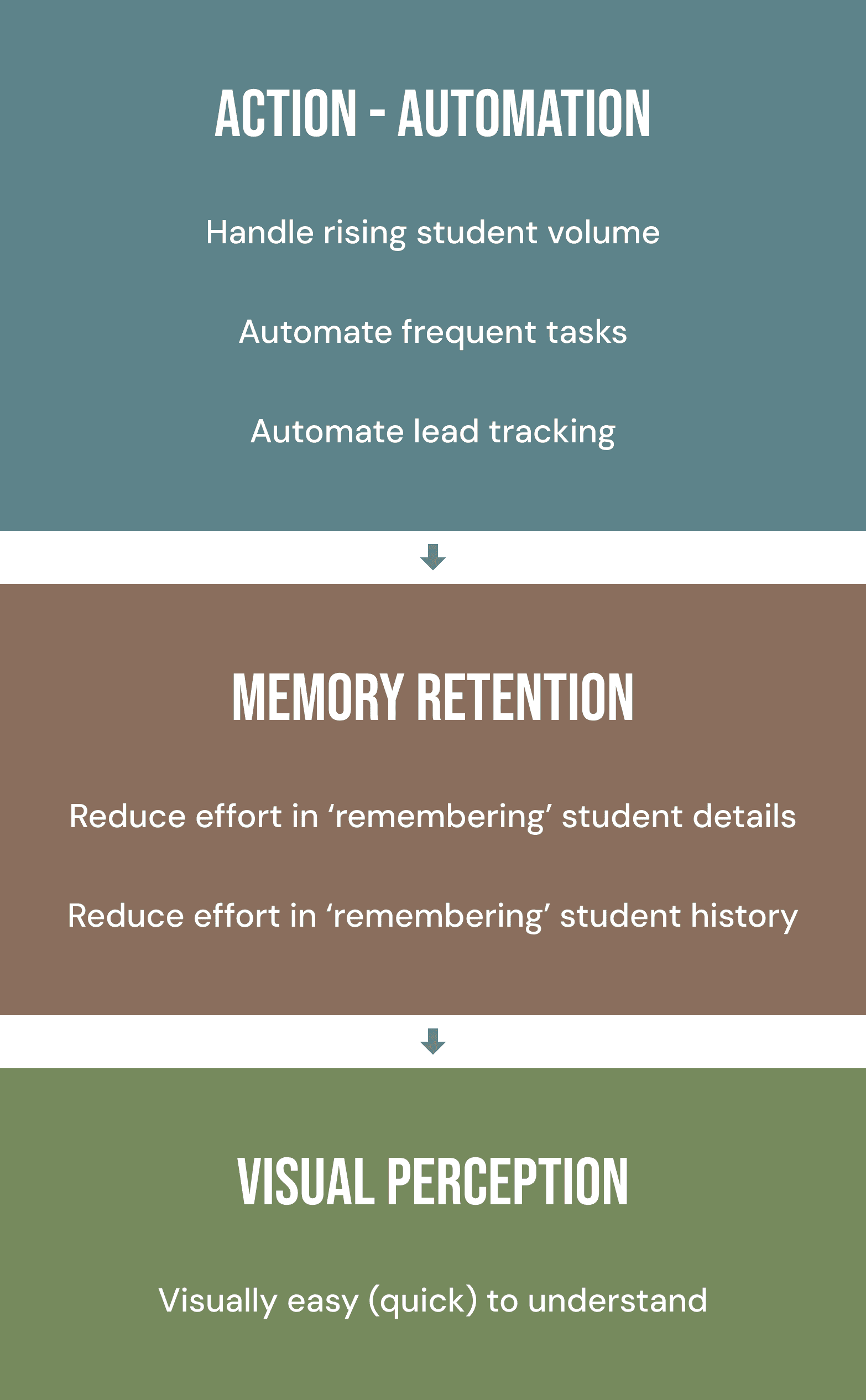
guiding design principles
I used 3 important pillars to design: action , memory retention and visual perception.
solution
automating
The PM and I spent several hours shadowing counsellors during actual work. We watched their screens, listened to calls, and documented the steps they took to manage each student.
Website, design & content @ Amartya Banerjee 2025.