
USER RESEARCh • end-to-end product design • erp
overview
Our college shifted to a new ERP app: Juno Campus. However, this move marked a significant change in how students managed their academic life.
Conversations with peers revealed repeated friction in navigating the application, tracking pending work, and understanding what actions were required at any given moment.
This project focuses on redesigning the assignment submission experience within Juno Campus - aiming to reduce confusion, improve visibility of critical information, and make task completion more enjoyable for students.

// research synthesis
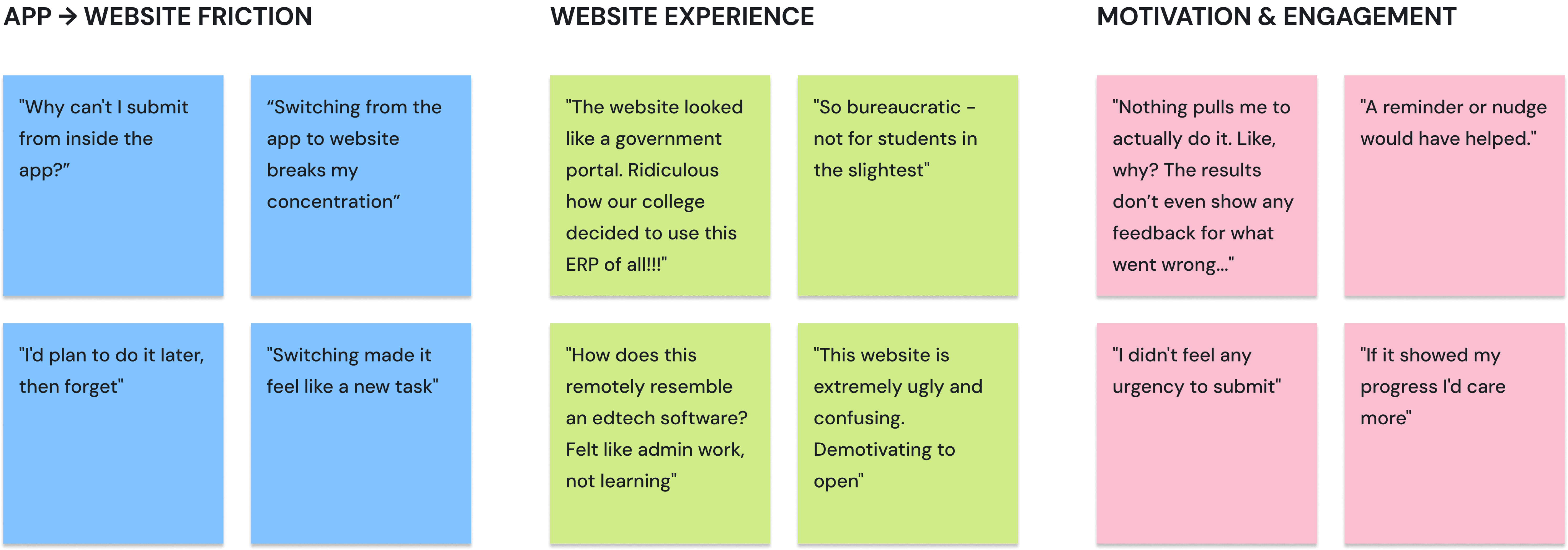
limited motivation to engage
I used affinity mapping to uncover key themes. Assignment submission emerged as a major friction point, as students had to switch to the website, disrupting their flow and contributing to procrastination and missed deadlines.
I first circulated a Google Form across three WhatsApp groups of students from different departments, receiving 43 responses. I then conducted voice-call interviews with 15 students for deeper insights.
// research synthesis
user journey
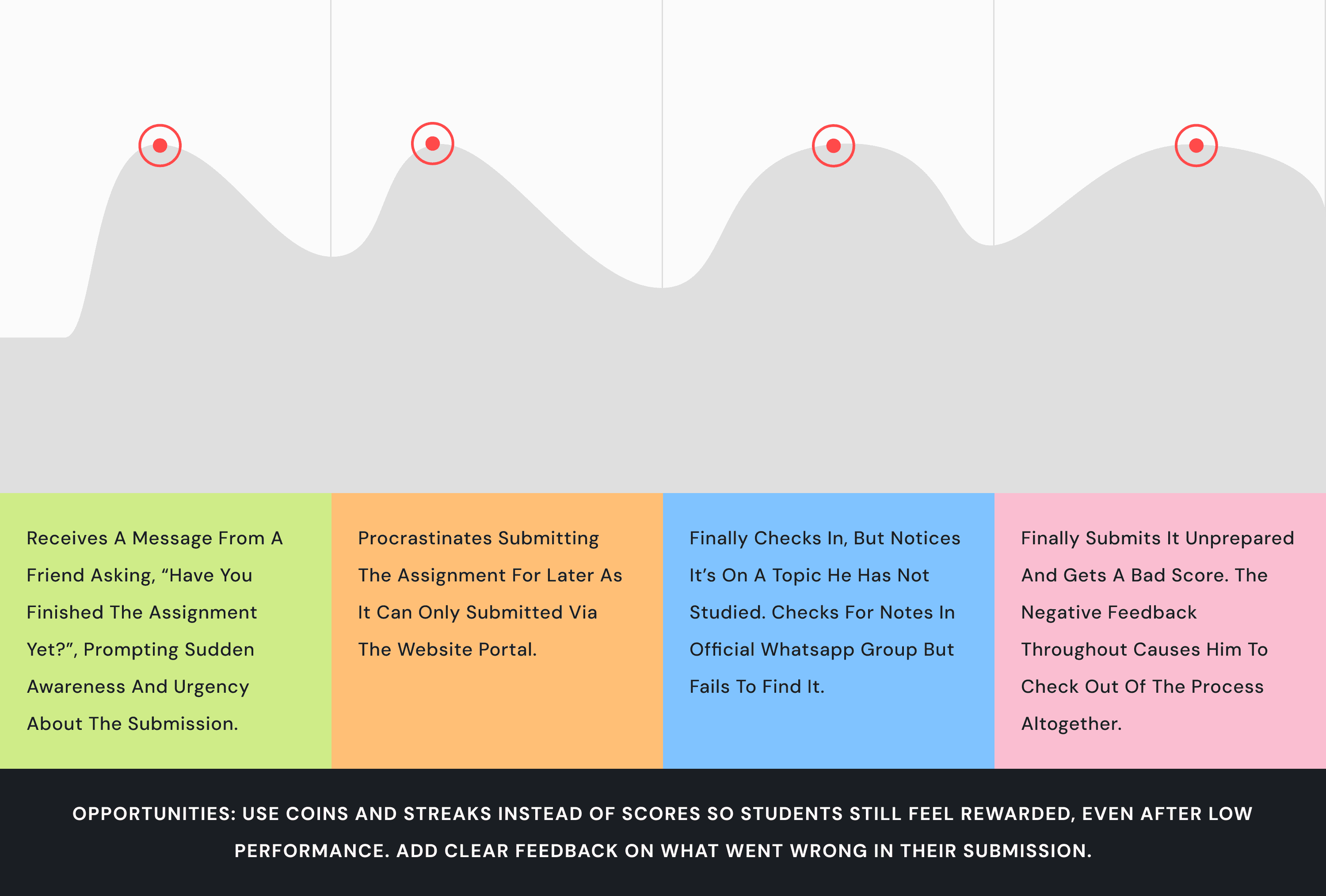
I mapped the user journey for Raghav - a student who frequently misses his assignments.
// Key insight:
Raghav needs a way to find due assignments on time, prepare from relevant coursework before he submits assignment, review what he did wrong, and obtain positive feedback from the task for future submissions.
// problem framing
how might we
Design a student management experience with a feedback loop that increases student motivation on submitting academic deliverables?
// user journey
peer-to-peer feedback loops
I brought initial concepts to campus and conducted impromptu feedback sessions. The most valuable insight came from watching students' immediate reactions.
Initial designs included leaderboards and peer comparison. Feedback sessions revealed this was counterproductive.
I'm already stressed about grades. I don't need another way to compare myself. to my classmates.
-Dhananjay (Student)
leaderboards concept


// the feedback loop
more clarity, less anxiety
Leader boards turned stress into disengagement. Students didn’t need another scoreboard; they needed reassurance.
I pivoted to a feedback loop where students competed with their own progress, quietly.
// trigger
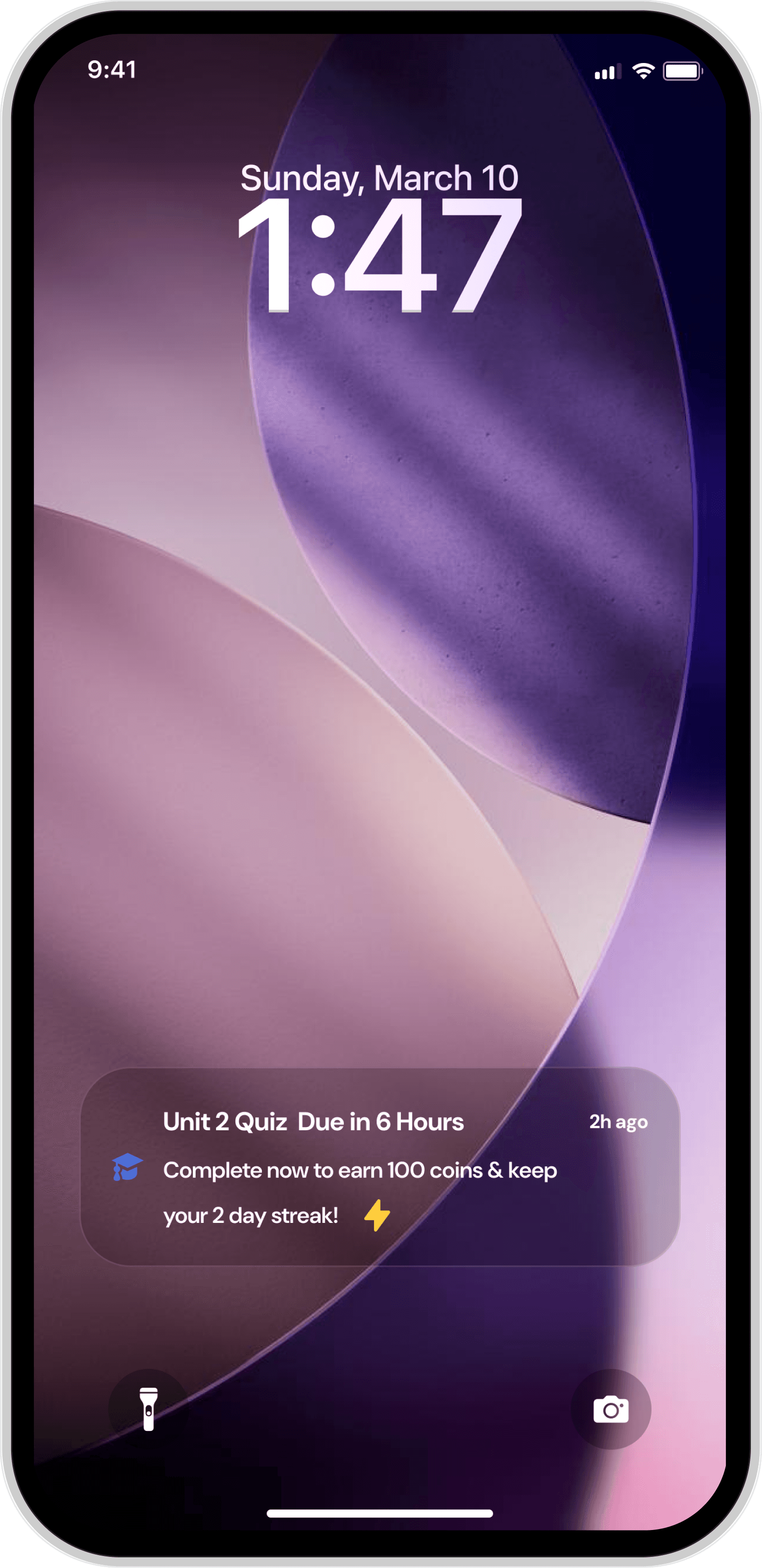
nudging them to start
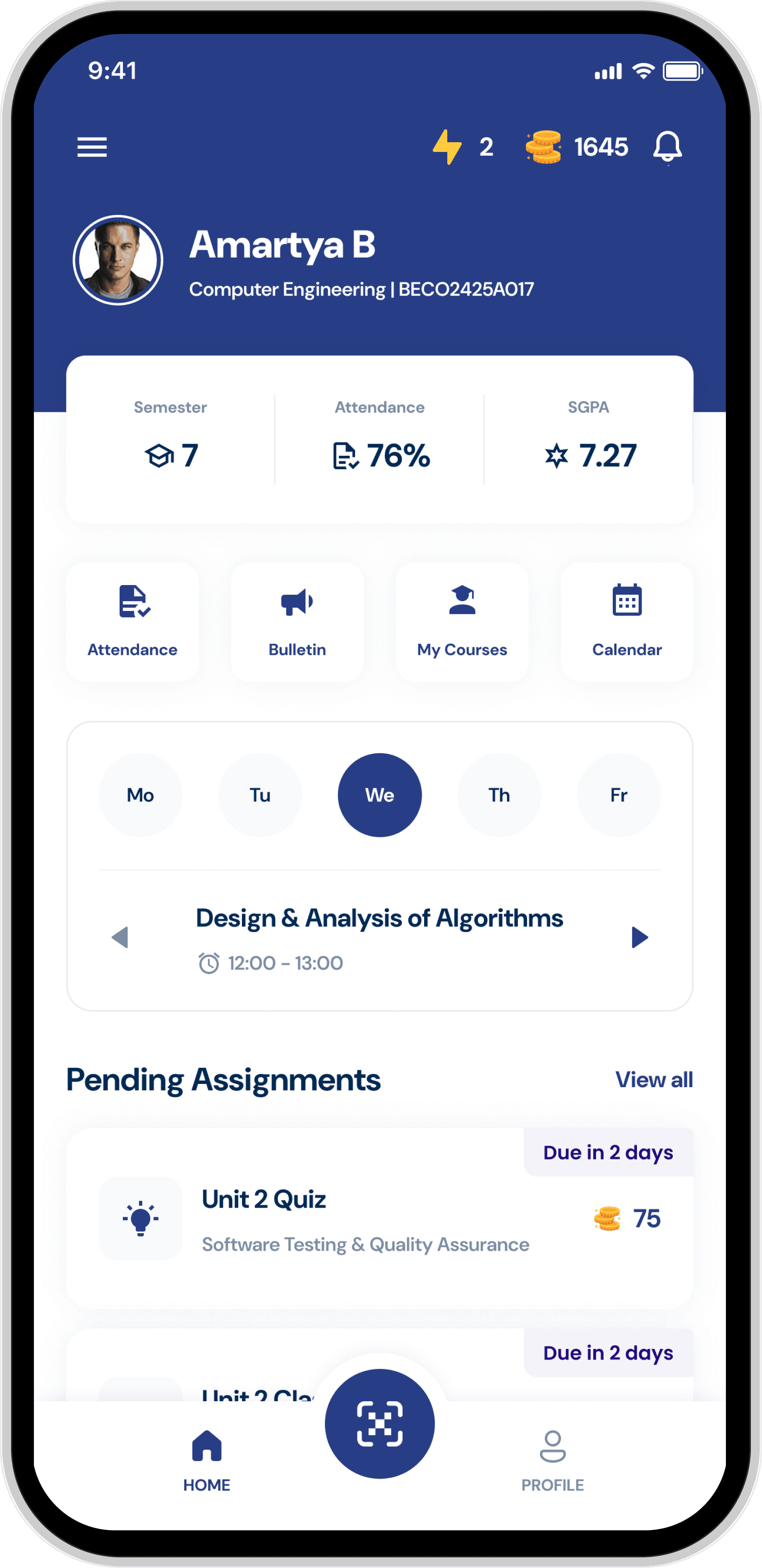
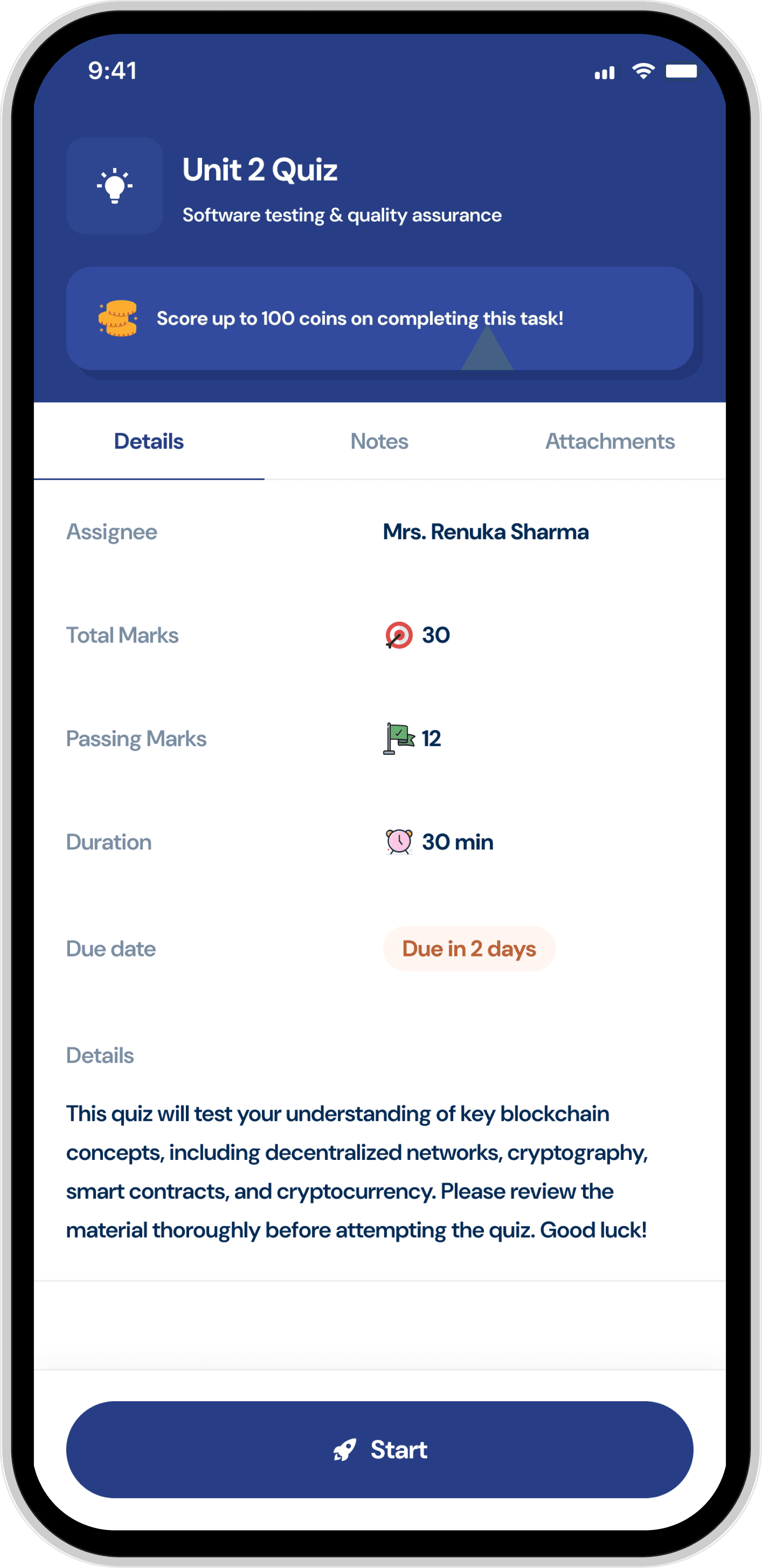
Students often knew they had assignments, but the friction was getting from “I should do this” to actually starting. I used timely, contextual nudges to surface pending work as well as a reward to serve as a motivating factor.
// prepare
remove friction before starting
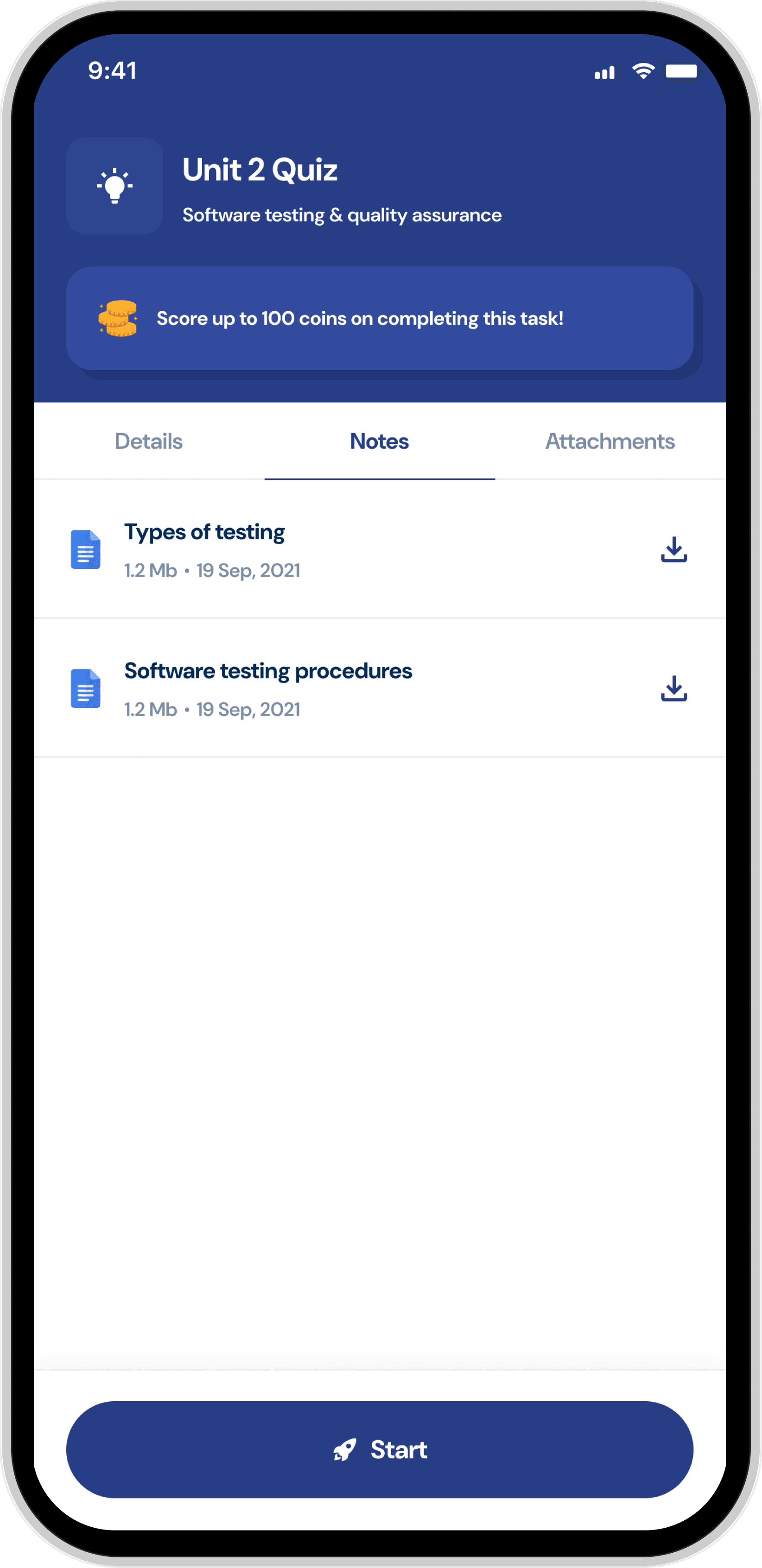
Research showed that feeling unprepared was a recurring reason students delayed assignments. The redesigned assignment flow therefore puts relevant course material directly alongside the task.
Instead of leaving the assignment to search through notes, WhatsApp groups, or other sources, students can access the professor’s material from the same flow.
// evaluate, reflect & reward
reinforce positive outcome
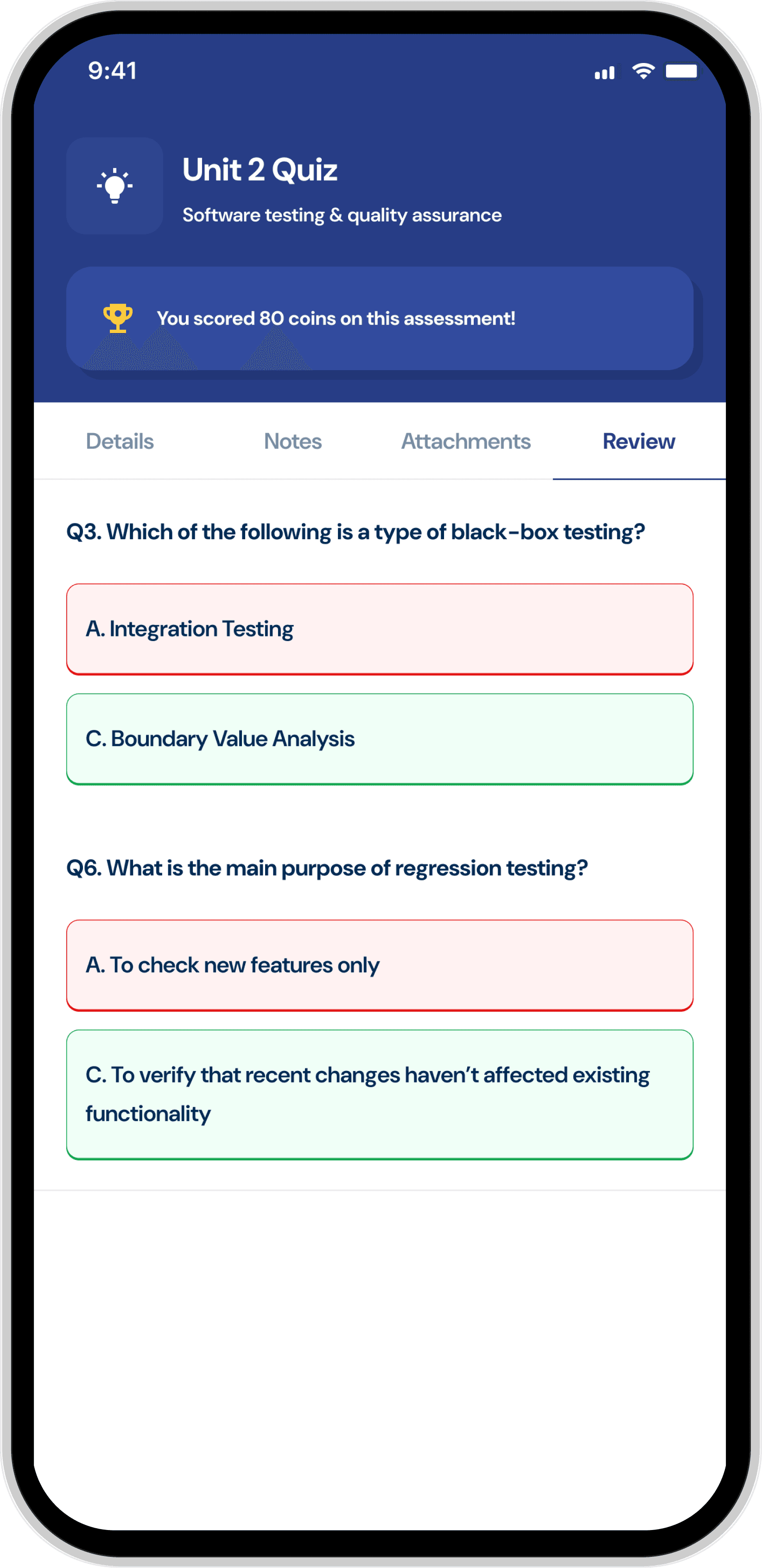
The submission experience was designed to give students a sense of progress even if they underperformed in the actual task.
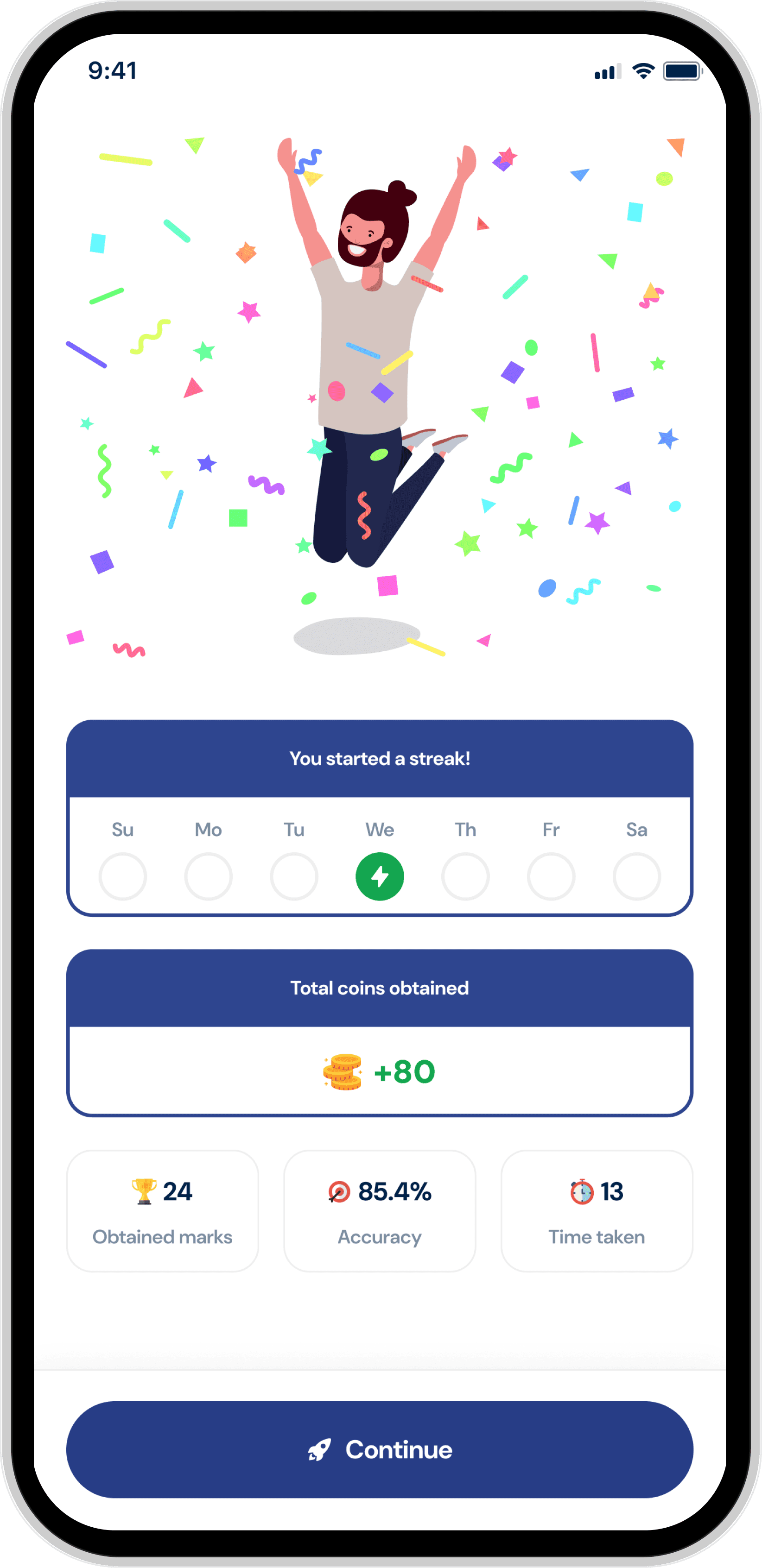
After submission, students see exactly which questions they got wrong - and the correct answer. Then a celebration screen: confetti, streak tracker, coins earned.
A small penalty (-25% of reward) awarded for missed deadlines & the total minimum score was capped to 0, preventing overt negative feedback.
// Synthesis
making them want to come back
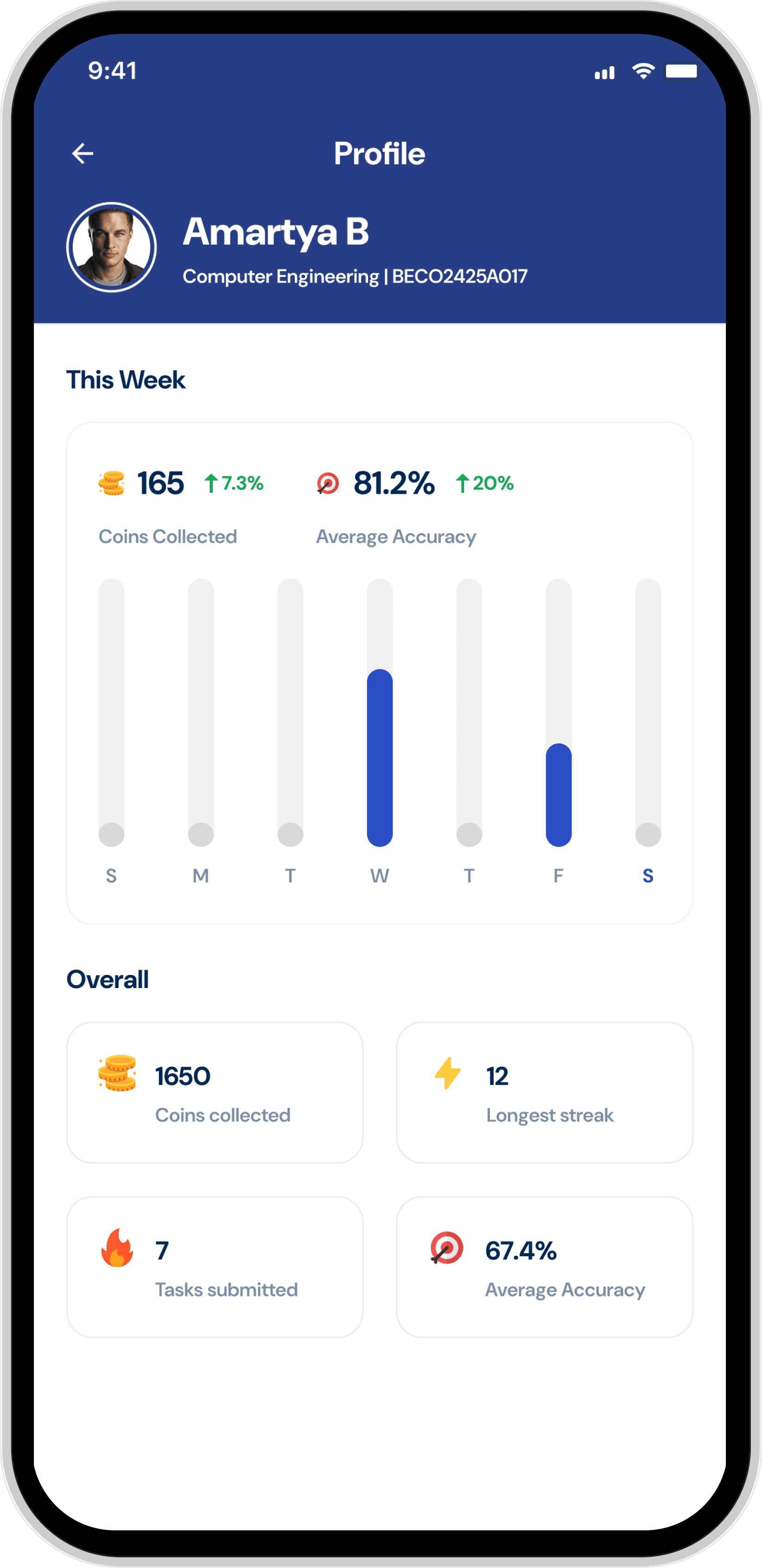
The profile experience closes the feedback loop by showing students their own progress over time.
Weekly coins and accuracy trends give students a simple way to answer: Am I improving?
This serves as a way for students wanting to come back and compete with themselves.
User Testing
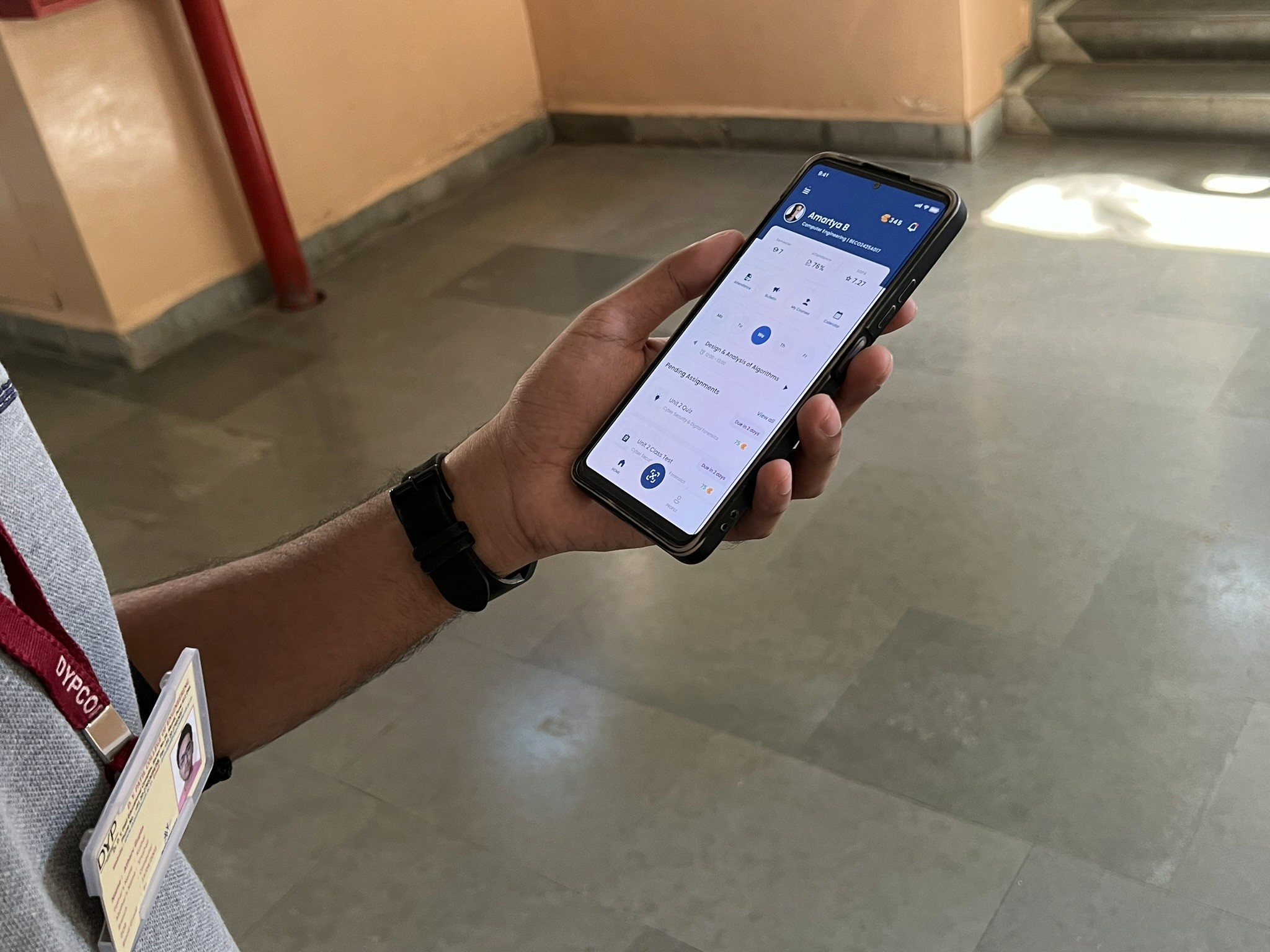
The study involved 20 college students from various semesters and departments, all of whom were frequent users of the current campus portal. Participants were asked to submit an assignment & rate the easiness, satisfaction & motivating factor.
4.7 average satisfaction rating
87 system usability scale
100% task success rate
my learnings
Leaderboards felt like an obvious move - gamification, competition, motivation. But students pushed back immediately, and that pushback was data. The learning here wasn't just "leaderboards are bad" - it was that the same psychological mechanism that motivates some people (social comparison) actively demotivates others, especially in an academic context where anxiety is already high. Good design means knowing which lever to pull for which audience.