confident study spot selection
SOLE UX DESIGNER
3 DAYS
DESIGN CHALLENGE
the problem
College students often struggle to locate and reserve suitable study spots on campus, leading to wasted time, last-minute frustration, and difficulty planning productive study sessions.
// Secondary research
research synthesis
With three days and no user access, I turned to the next best thing - students talking honestly about their campus experience online. I went through 8–10 university subreddits looking specifically for posts about studying, library frustration, and space-finding.
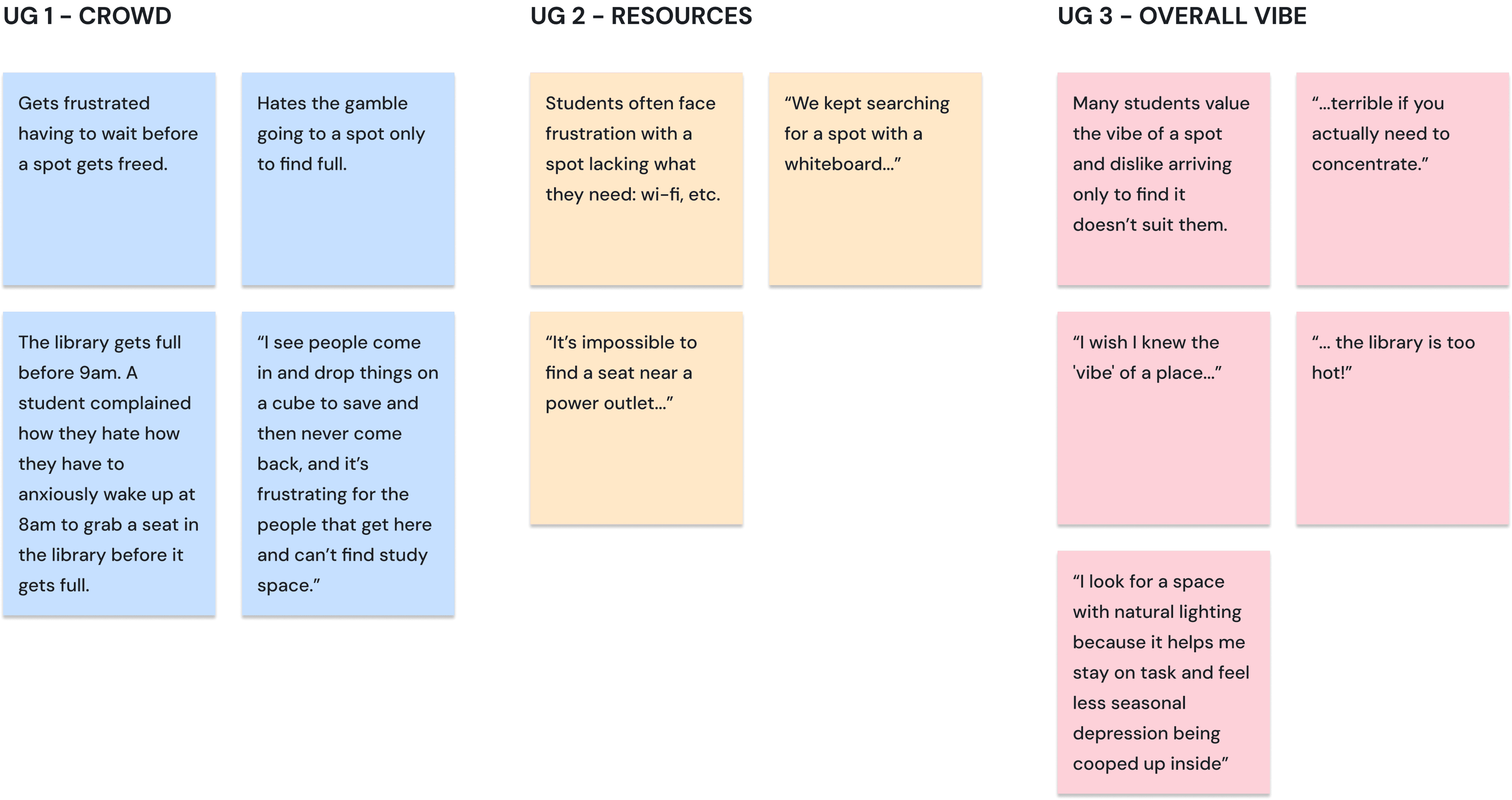
I organised findings into an affinity map across three themes: crowd, resources & overall vibe.
it's ridiculous there's absolutely no place to study, everywhere is so annoyingly crowded. It took me 30 mins to find a place to study.
- r/UCLA
// Research synthesis
pain points
Students often reach spots only to find them full or noisy. This gamble makes them avoid going to spots altogether.
Missing essentials like Wi-Fi or coffee, and a poor vibe, such as bad lighting or environment often force students to relocate.
it's ridiculous there's absolutely no place to study, everywhere is so annoyingly crowded. It took me 30 mins to find a place to study.
// problem framework
the perfect spot
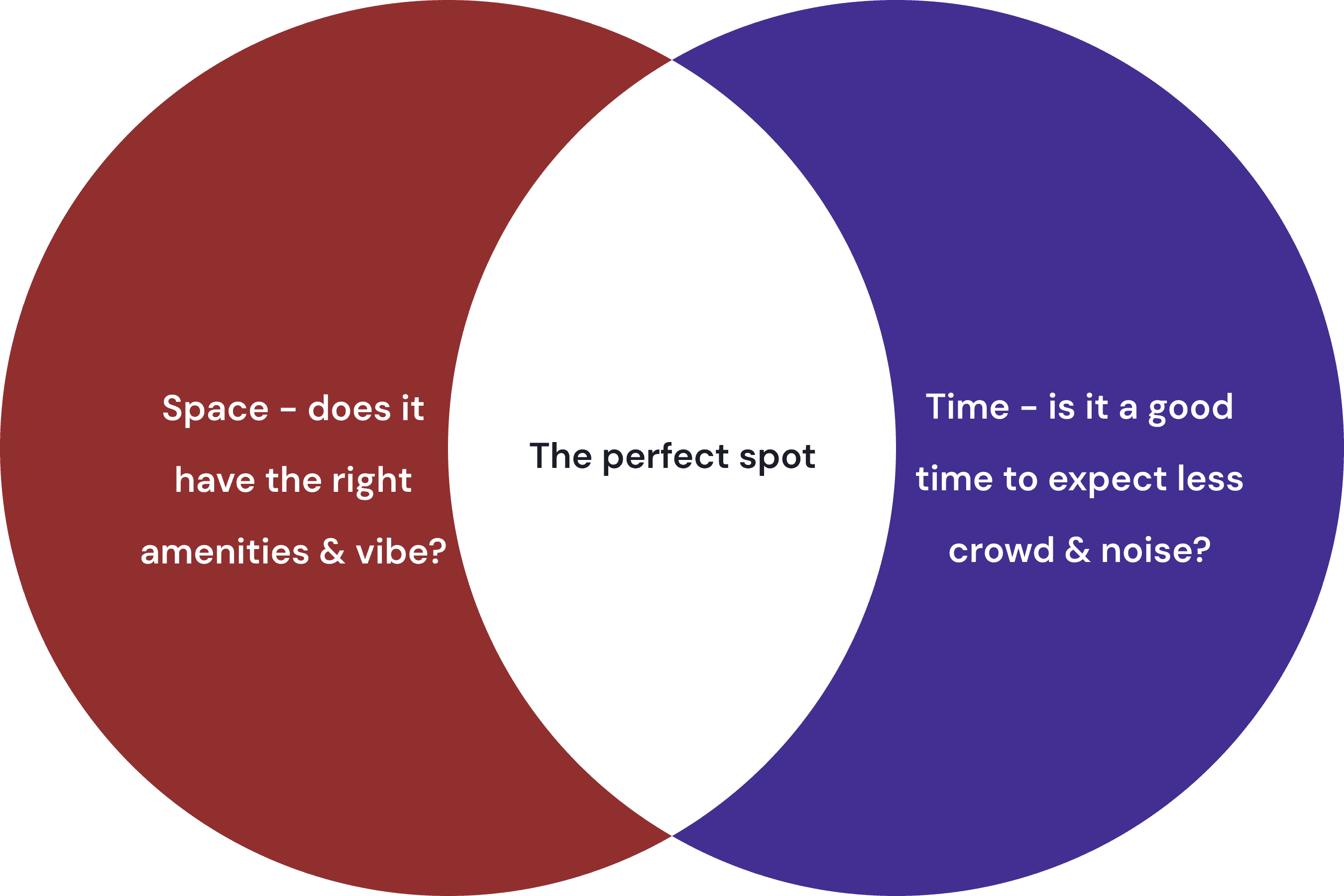
I defined a problem framework that describes what an ideal spot means for a student. An ideal spot sits at the intersection of:

// problem framing
how might we
Help a student choose the right spot in terms of the right space and time?
// reddit insights
pivoting from reservations
Initially, I explored a reservation-based system to let users book study spots in advance. I posted my designs on a few college subreddits.
However, several subreddit users complained this introduced unnecessary rigidity as well as trust issues from QR based check-ins.
// Key insight:
Study sessions are often spontaneous and unpredictable, making reservations prone to conflicts, no-shows, and friction.
I pivoted the experience toward explorability instead of commitment, focusing on real-time insights like crowd levels, ambience, and available amenities.
exploration
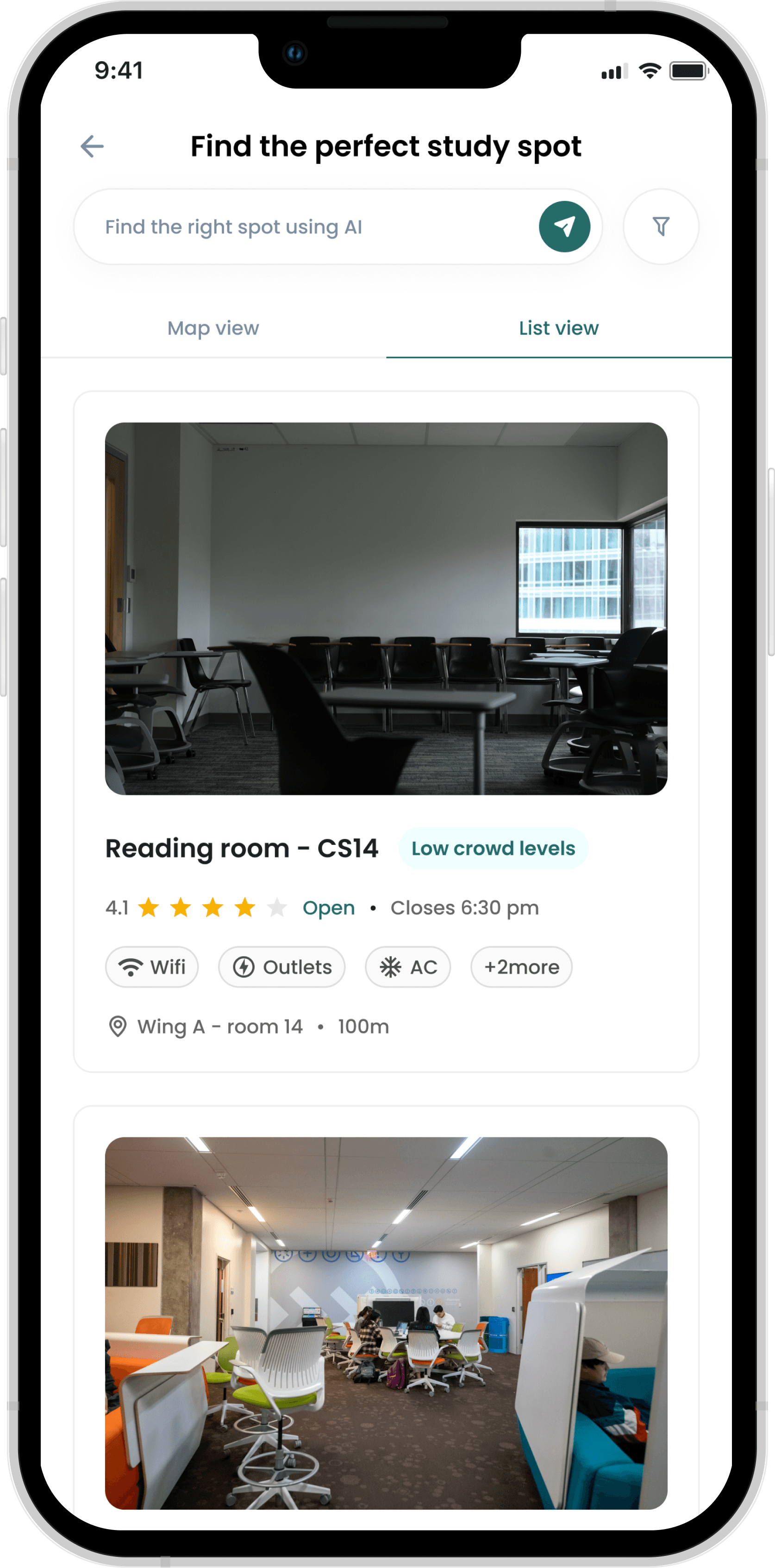
A list view (and map view toggle) surfaces nearby spots with the information that matters at a glance: current occupancy, open/closed status, distance, and key amenities.
filter for space
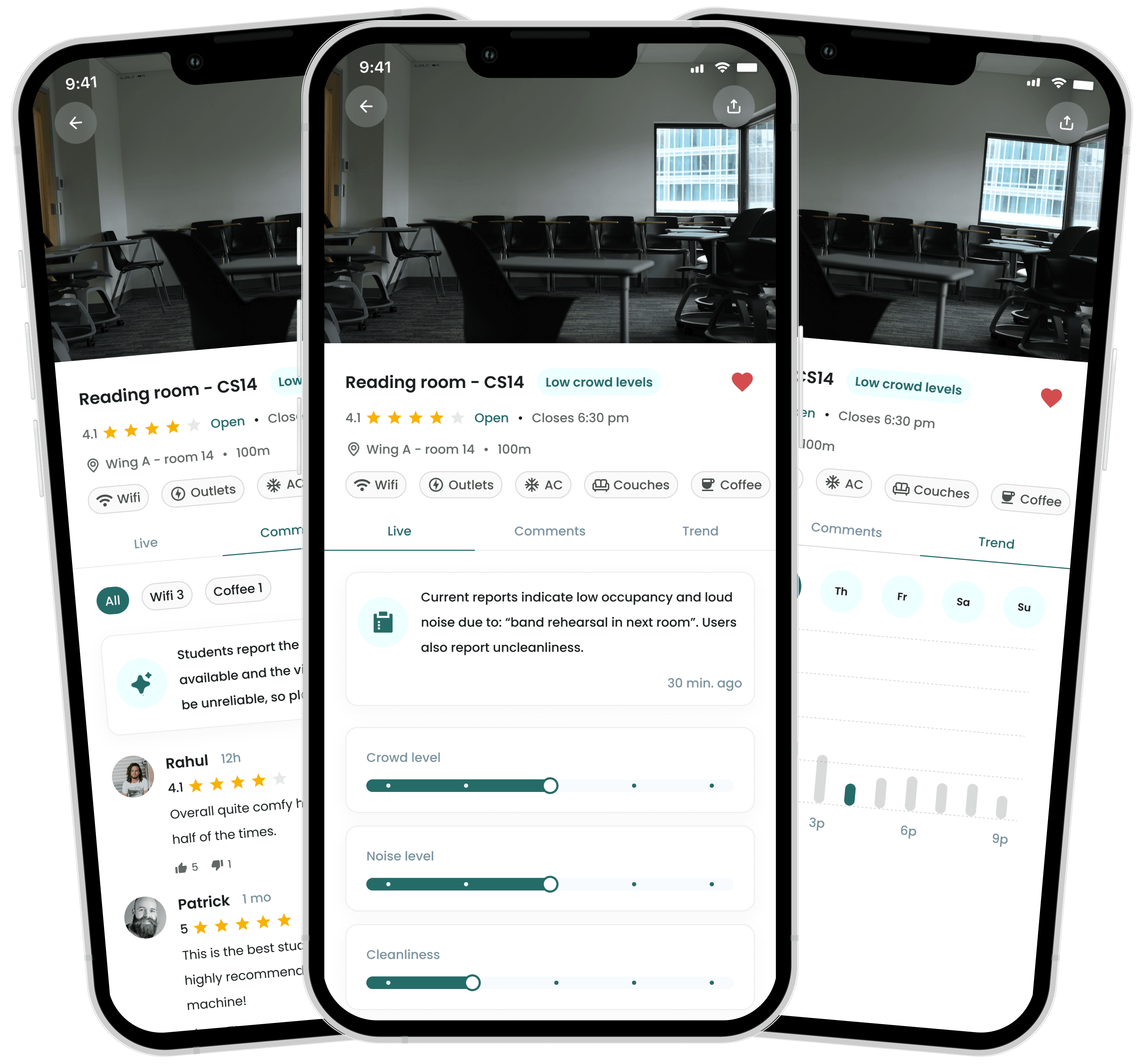
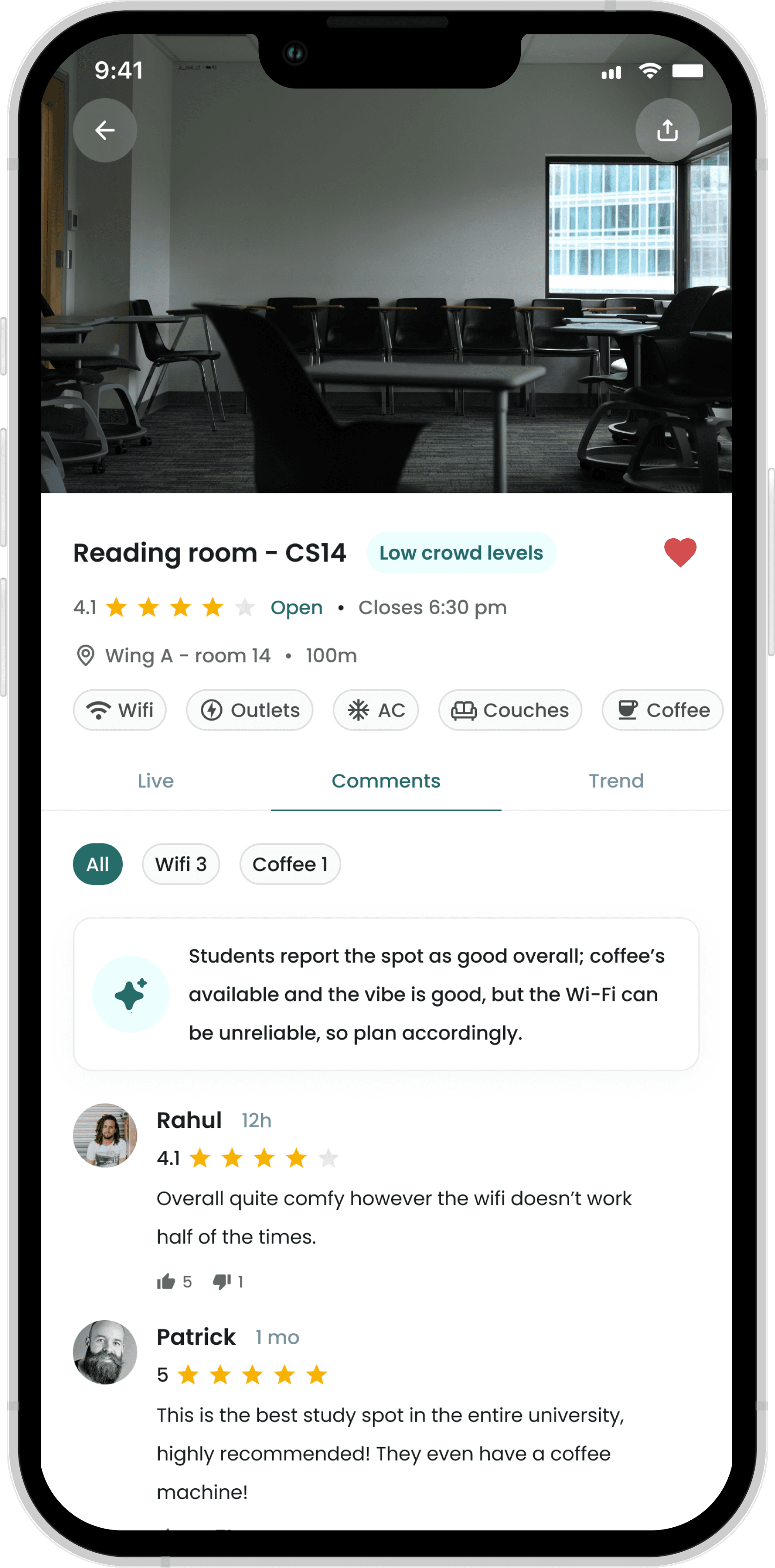
Each spot detail page leads with a real photo of the space so students can assess the vibe before they leave. Reviews are filterable so students can quickly find relevant comments (a "Wi-Fi 3" filter showing only reviews that mention Wi-Fi).
filter for time
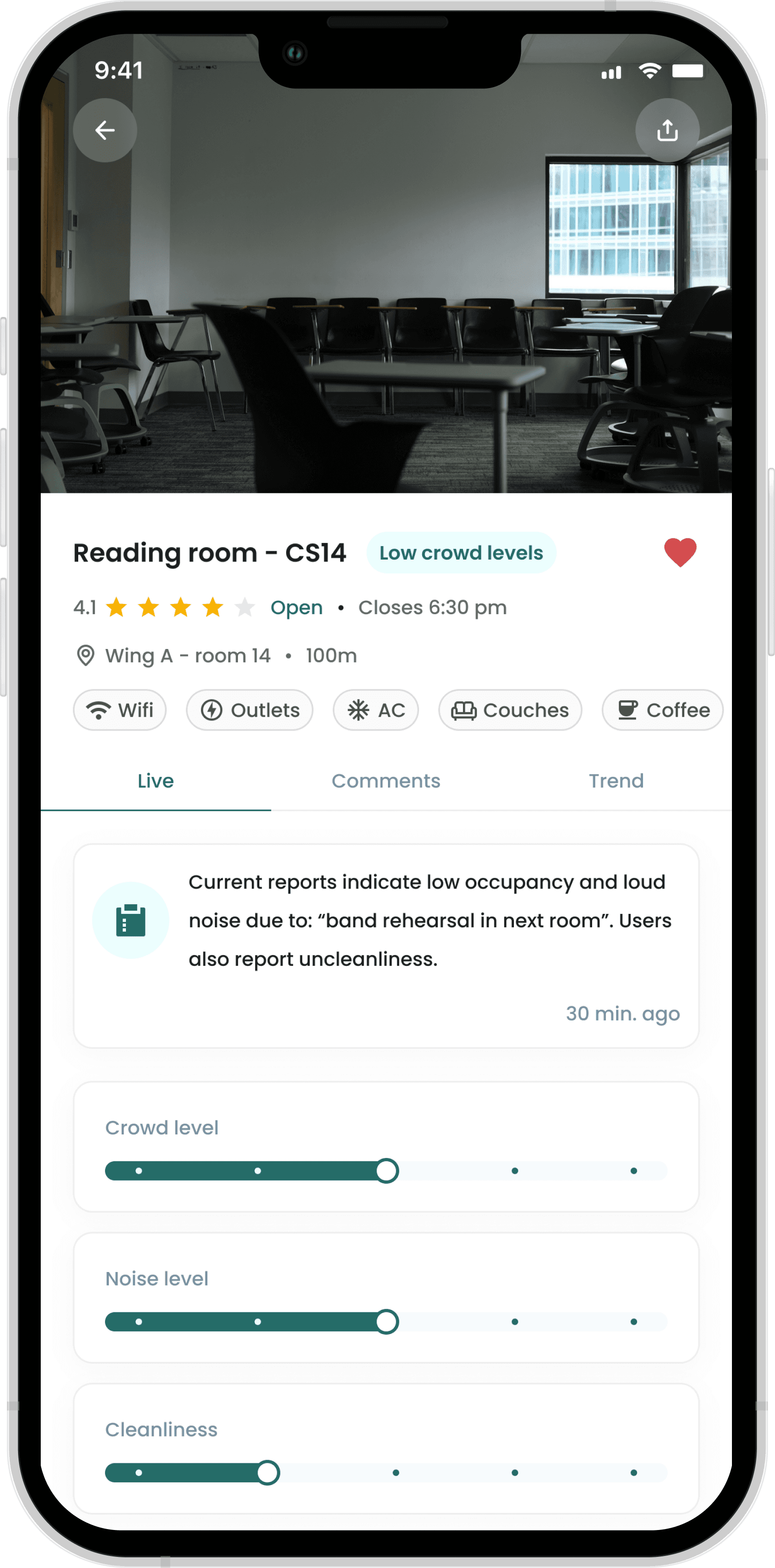
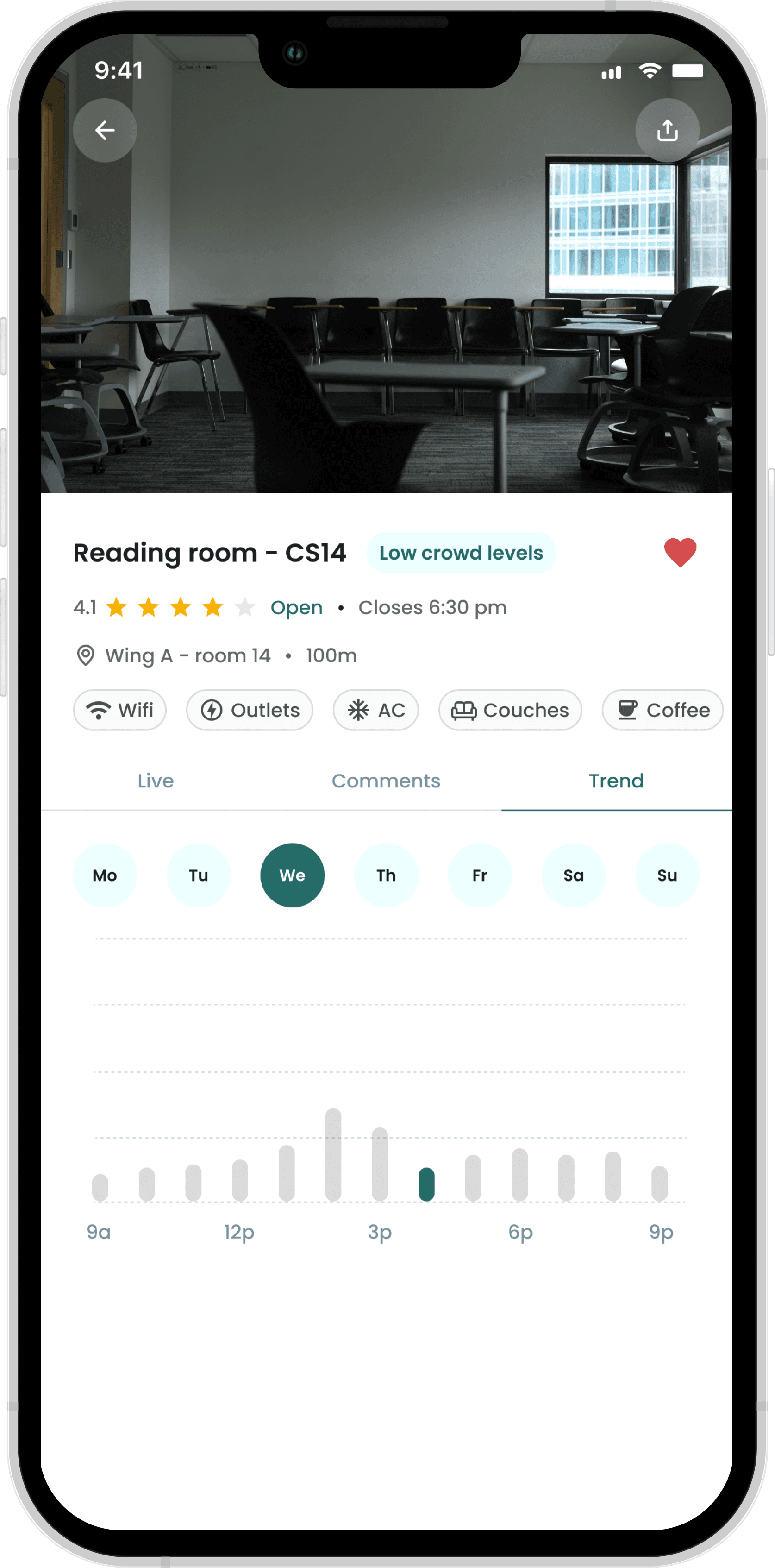
This is where the design does its most important work. Two tabs give students two very important signals:
A plain-language summary of current conditions generated from student responses currently in the spot ("Current reports indicate low occupancy and loud noise due to band rehearsal in next room"). Sliders show crowd level, noise level, and cleanliness updated in the last 30 minutes.
A day-by-day, hour-by-hour crowd chart so students can identify the quietest window for a spot they already like.
what the pivot taught me
The reservation concept felt complete when I designed it. It had all the right surfaces — a calendar, a confirmation screen, a reminder state. It looked like a finished product.
The Reddit feedback broke that confidence in about an hour. Study behaviour is too fluid for commitment-based systems. Students don't plan study sessions the way they plan meetings. Designing for how students should behave rather than how they actually behave would have shipped a product nobody used.
The pivot from reservation to exploration wasn't a setback — it was the most important design decision in the project. It meant rebuilding almost everything, but it produced a flow that matched real behaviour instead of fighting it.
Two things I'd carry forward: designing for flexibility first in any context where user intent is unpredictable, and testing direction early rather than execution late. Posting a rough prototype to Reddit on day one would have saved half a day of work on a concept that was never going to land.